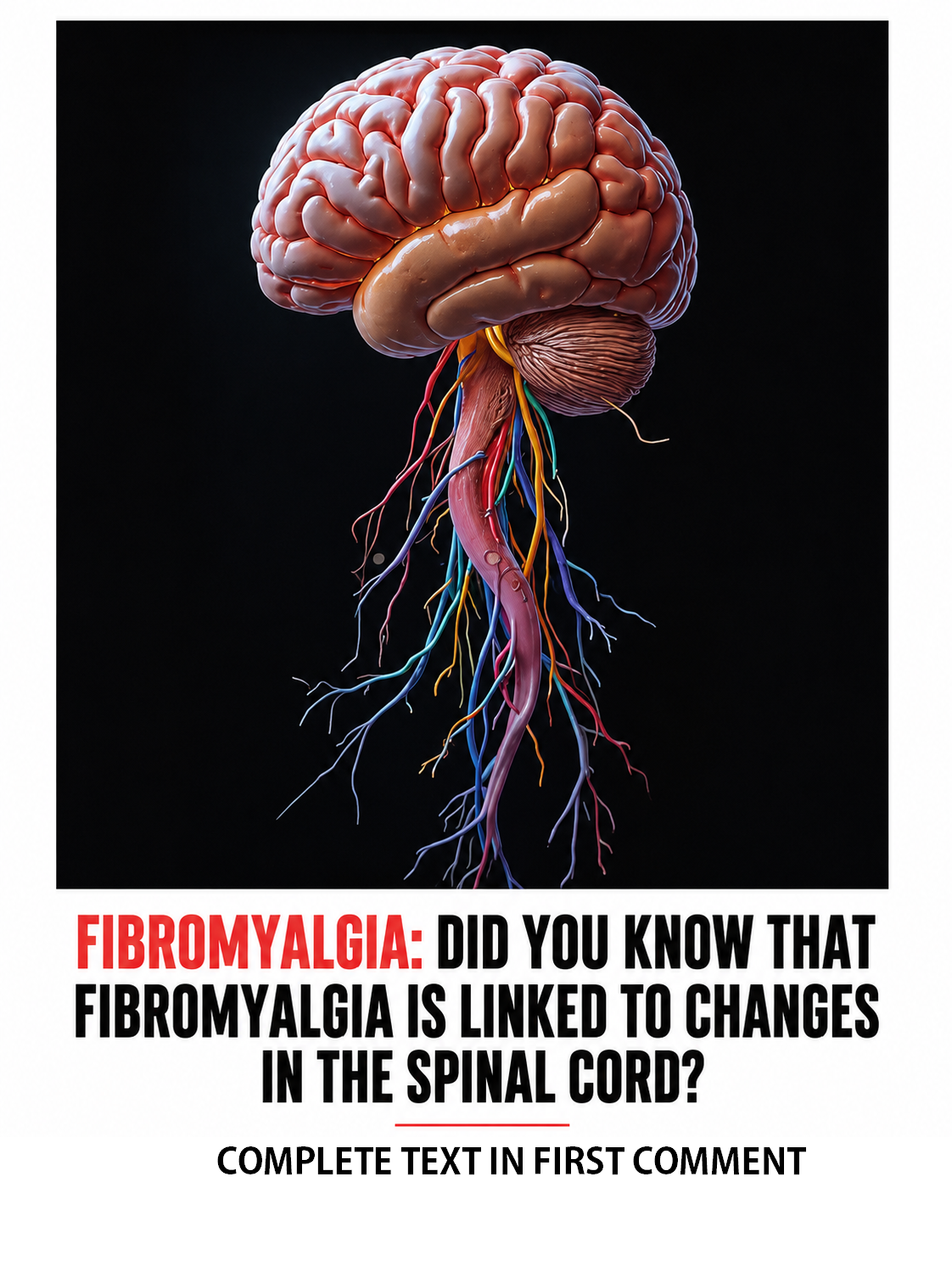
When we talk about fibromyalgia, many people think only of muscle pain. But studies show that the root of the problem lies in the central nervous system, especially the brain, spinal cord, and cerebrospinal fluid (CSF)—the fluid that surrounds and protects the brain and spinal cord.
The spinal cord acts as a “bridge” between the body and the brain, transmitting sensory information—including pain. In recent years, scientific research has revealed that this transmission does not function normally in people with fibromyalgia.
🔎 What Happens in the Spinal Cord in Fibromyalgia?
1. Nerve hypersensitivity (central sensitization)
▪️ The spinal cord amplifies signals coming from the body.
▪️ Stimuli that would normally be mild—such as touch, cold, or pressure—may be interpreted as intense pain.
▪️ This phenomenon is called central sensitization—a “processing error” that turns the volume of pain signals much higher than it should be.
2. Changes in cerebrospinal fluid (CSF)
The CSF, the fluid that circulates around the spinal cord and brain, also shows significant changes in people with fibromyalgia:
▪️ Altered neurotransmitters and neuropeptides: elevated levels of substance P (which intensifies pain) and dynorphin A, along with reduced serotonin, which normally helps inhibit pain signals.
▪️ These changes may help explain pain hypersensitivity and the body’s difficulty “turning off the alarm” of chronic pain.
▪️ CSF studies suggest that chemical dysregulation in the fluid surrounding the spinal cord may contribute to increased pain perception.
3. A defect in the “pain filter”
▪️ Normally, the spinal cord acts as a filter, blocking unnecessary pain signals before they reach the brain.
▪️ In fibromyalgia, this filter does not function properly, allowing normally harmless stimuli—such as clothing touching the body, cold wind, or hugs—to be perceived as painful.
4. Neurochemical inflammation (neuroinflammation)
▪️ Glial cells in the spinal cord can become excessively activated.
▪️ They release inflammatory substances that increase pain sensitivity, helping maintain the cycle of chronic pain.
5. Scientific evidence
Lima and Valença (2015): A review of studies reported changes in the CSF of patients with fibromyalgia, including increased substance P and decreased serotonin, which may help explain pain hypersensitivity.
Medscape (2025): Reported spinal cord disinhibition, suggesting that dysfunction of inhibitory systems may contribute to pain amplification.
Functional magnetic resonance imaging (fMRI): Research has shown that people with fibromyalgia can have stronger responses in the spinal cord to stimuli that would normally not be painful.
🚨 Why Is This Important?
▪️ It helps explain why fibromyalgia is not “all in your head” or something imaginary—it involves real changes in how the central nervous system processes pain.
▪️ It helps explain why ordinary painkillers may not work well for everyone, since fibromyalgia involves abnormal pain processing within the nervous system.
▪️ It highlights the importance of therapies that regulate nervous-system activity and address pain through multiple approaches.
💡 What Do Specialists Recommend?
▪️ Gentle, regular exercise 🏃♀️: Can help regulate nervous-system activity and reduce pain sensitivity.
▪️ Quality sleep 😴: Allows the brain and nervous system to better regulate pain perception.
▪️ Therapies that calm the nervous system 🧘: Deep breathing, meditation, yoga, or prayer may help reduce nervous-system arousal.
▪️ Targeted medical treatment 💊: Certain medications can act on neurotransmitter systems involved in pain processing and may help reduce pain.
▪️ Pay attention to unusual symptoms ⚠️: Weakness, loss of strength, or severe changes in sensation may indicate another condition affecting the spinal cord and should be medically evaluated.
✨ Conclusion
Fibromyalgia does not originate solely in the muscles. It also involves the way the spinal cord and brain process and amplify pain signals, along with complex changes in the nervous system and, in some studies, cerebrospinal fluid chemistry. Neurochemical changes, impaired pain inhibition, and abnormal nervous-system activity may help explain the intense and persistent pain experienced by people with fibromyalgia.
Understanding this is important for fighting stigma, guiding more effective treatment approaches, and giving hope to people living with this condition. 💜